Higala: A Distance from Grief
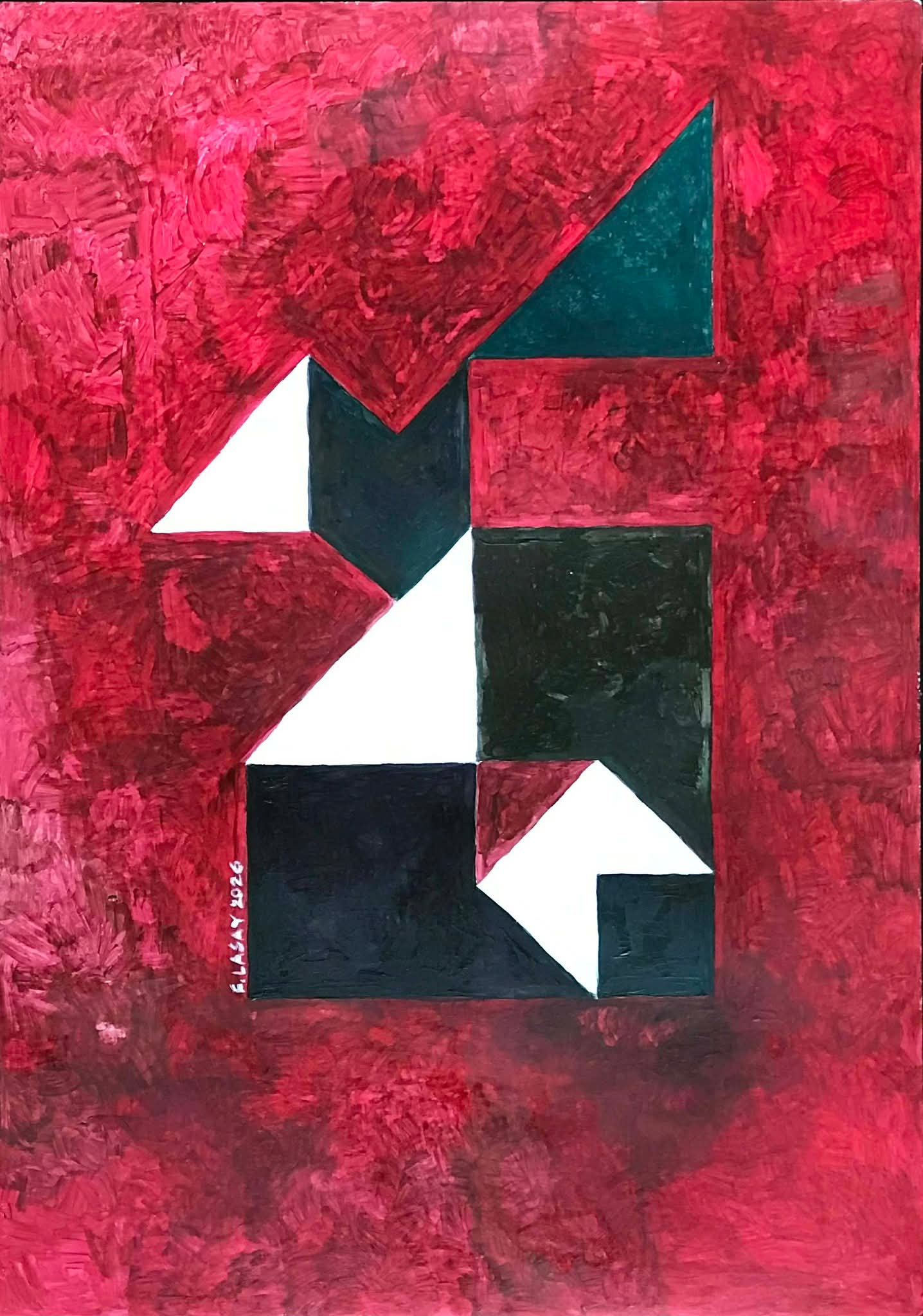
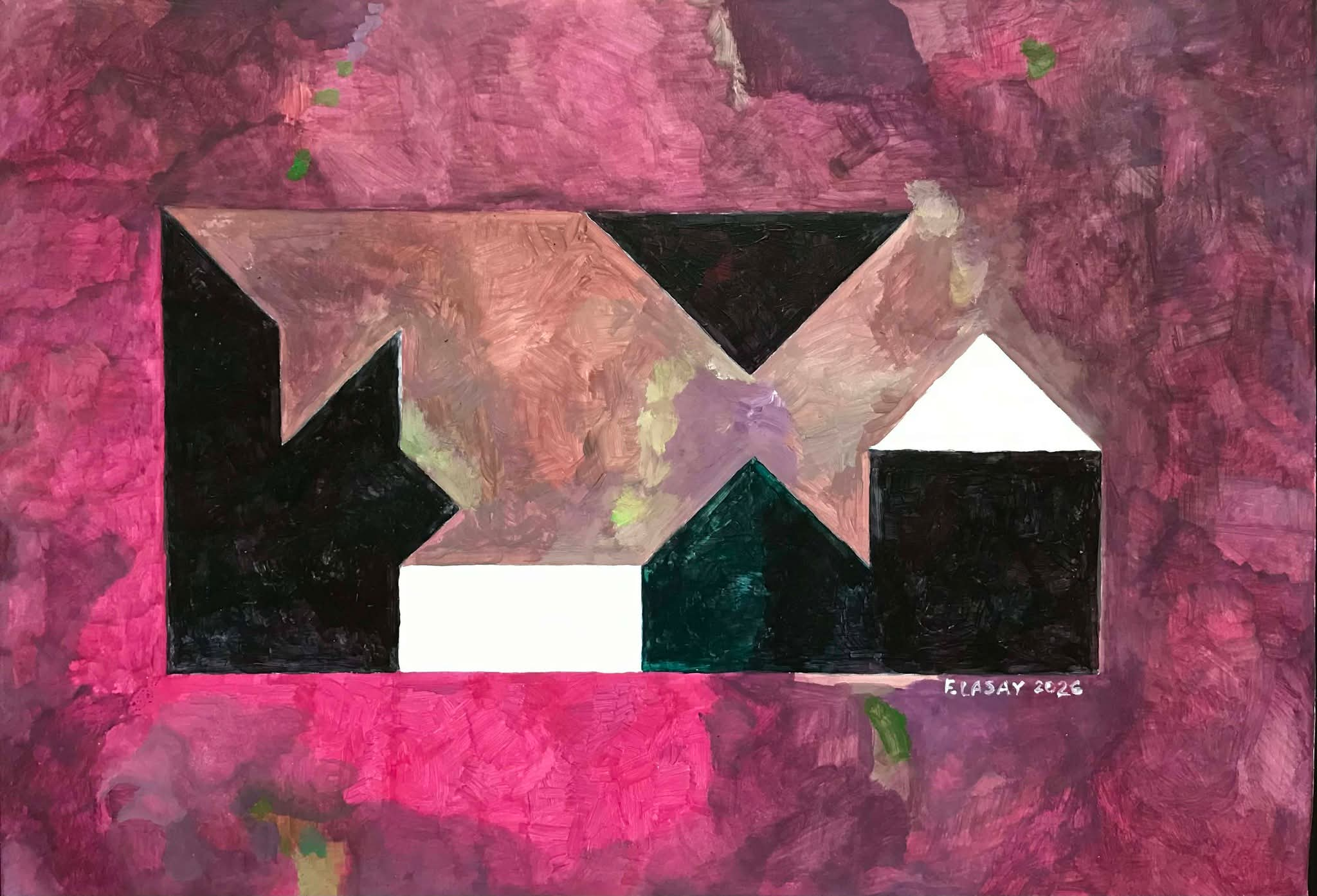
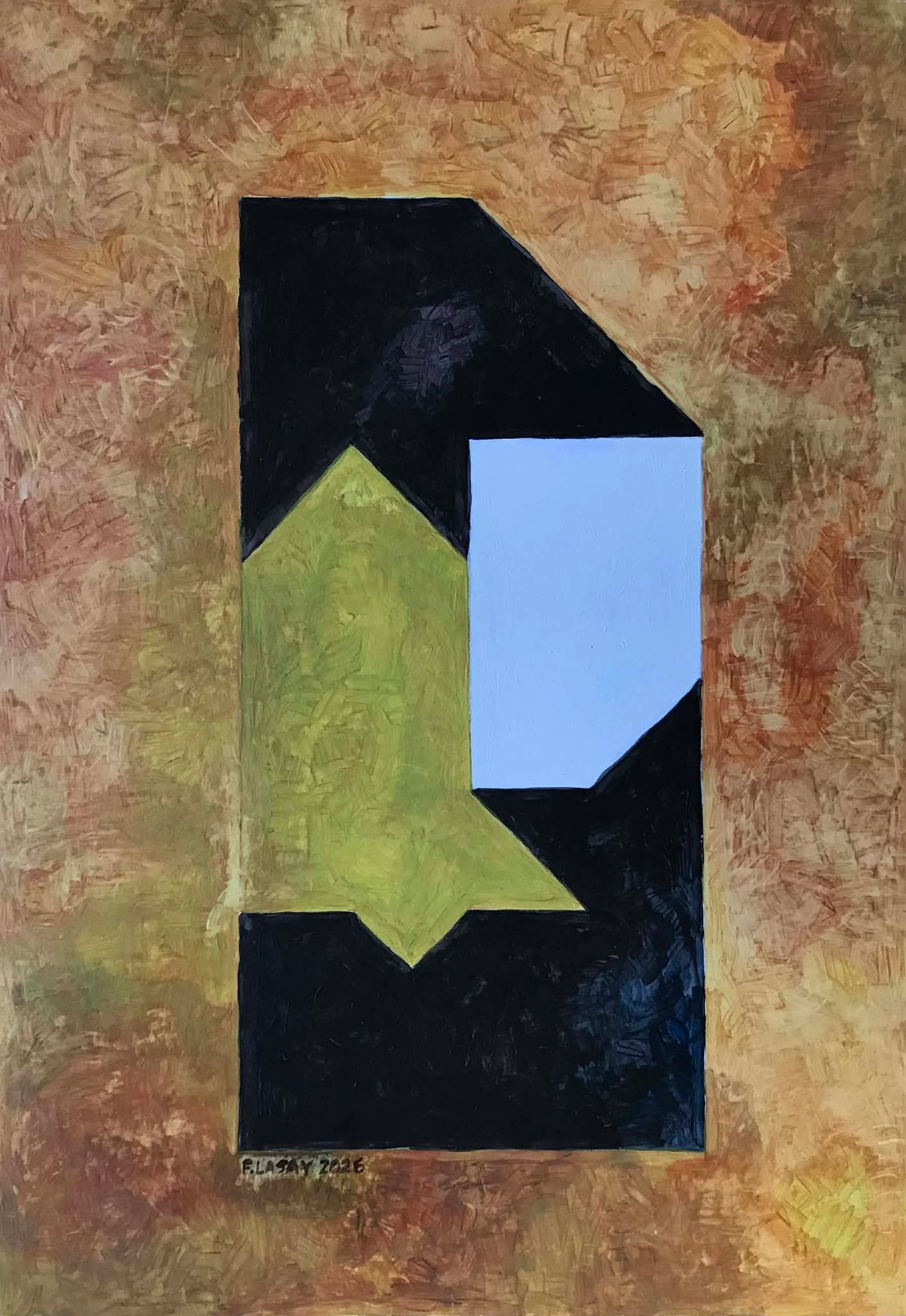
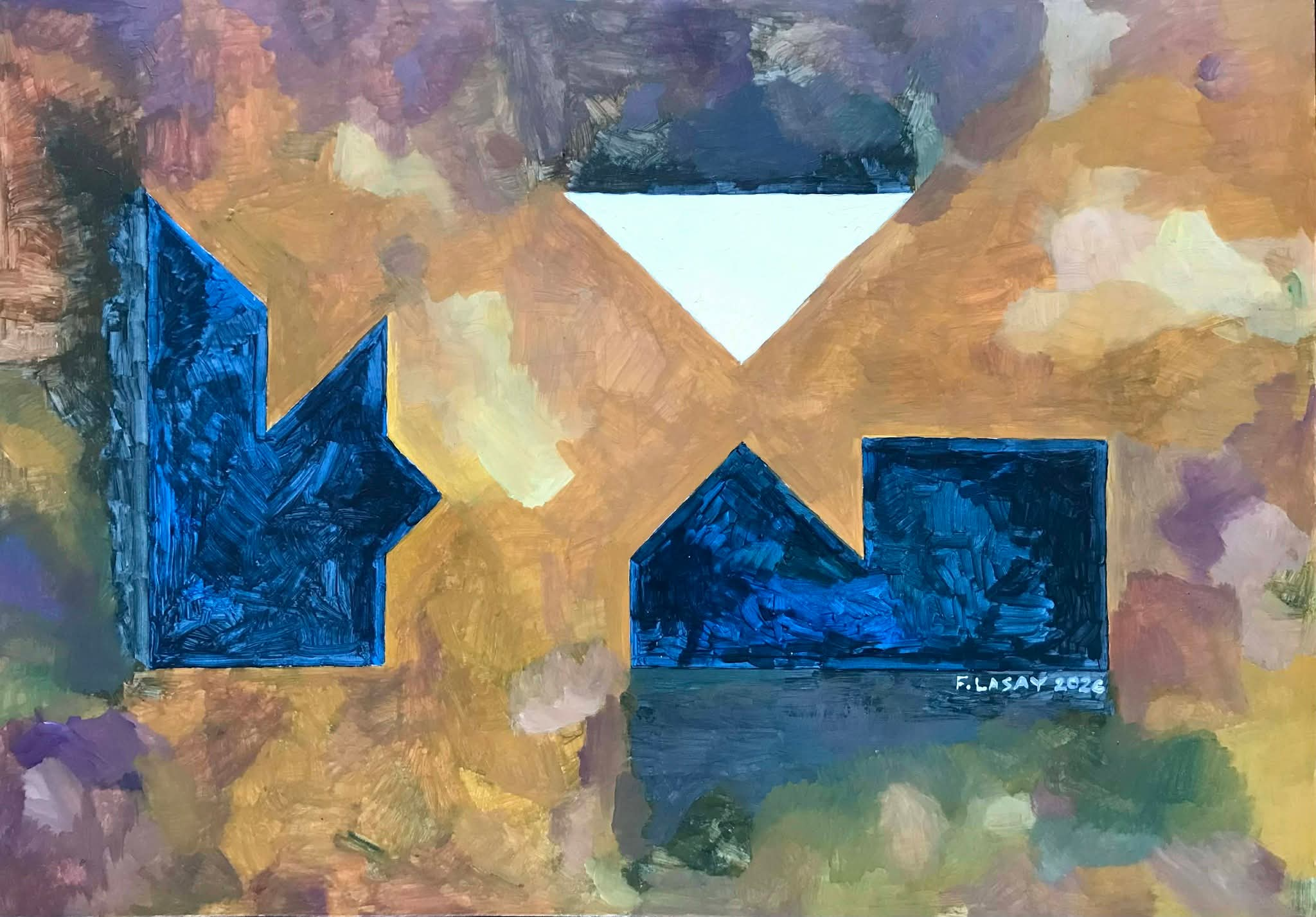
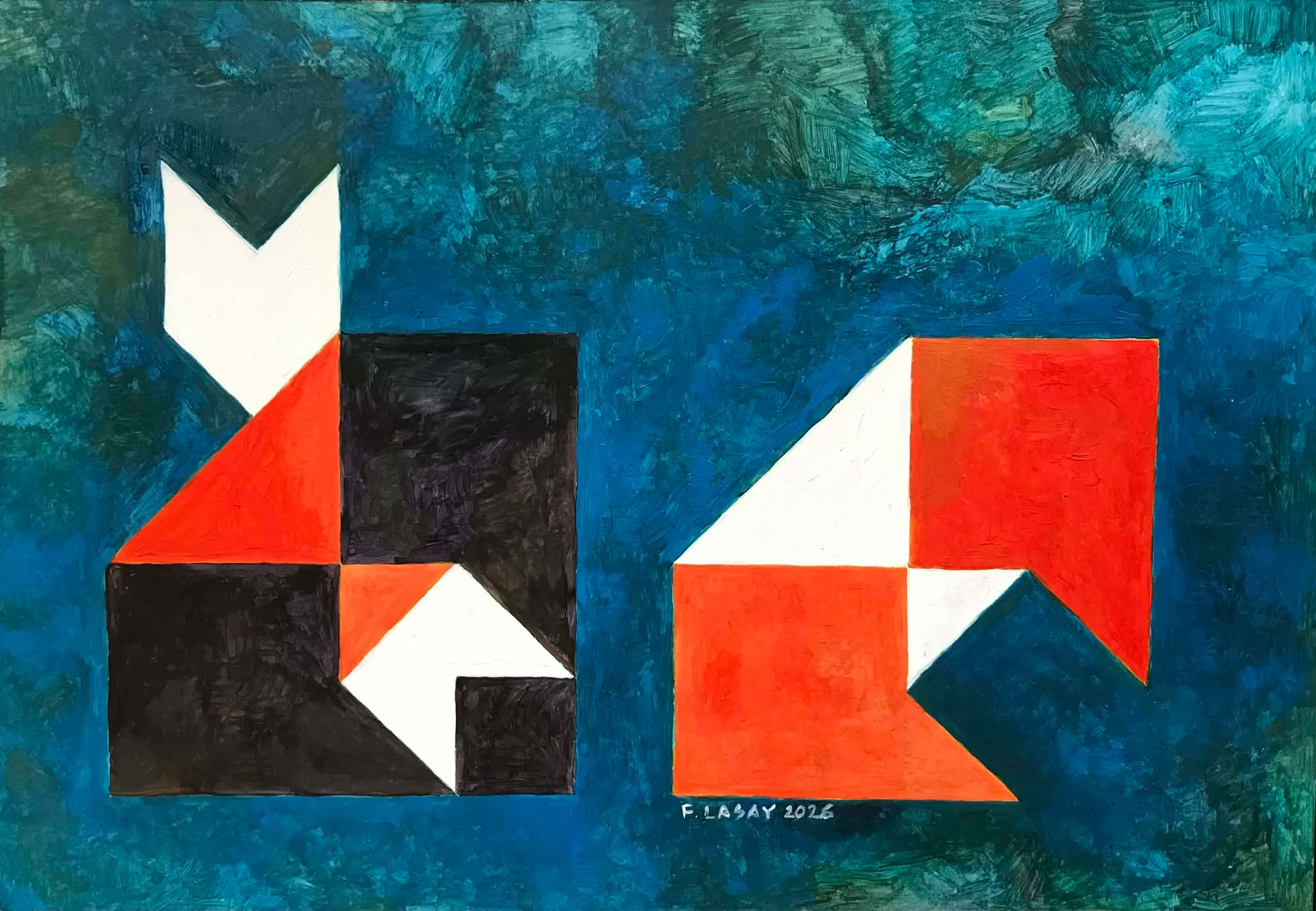
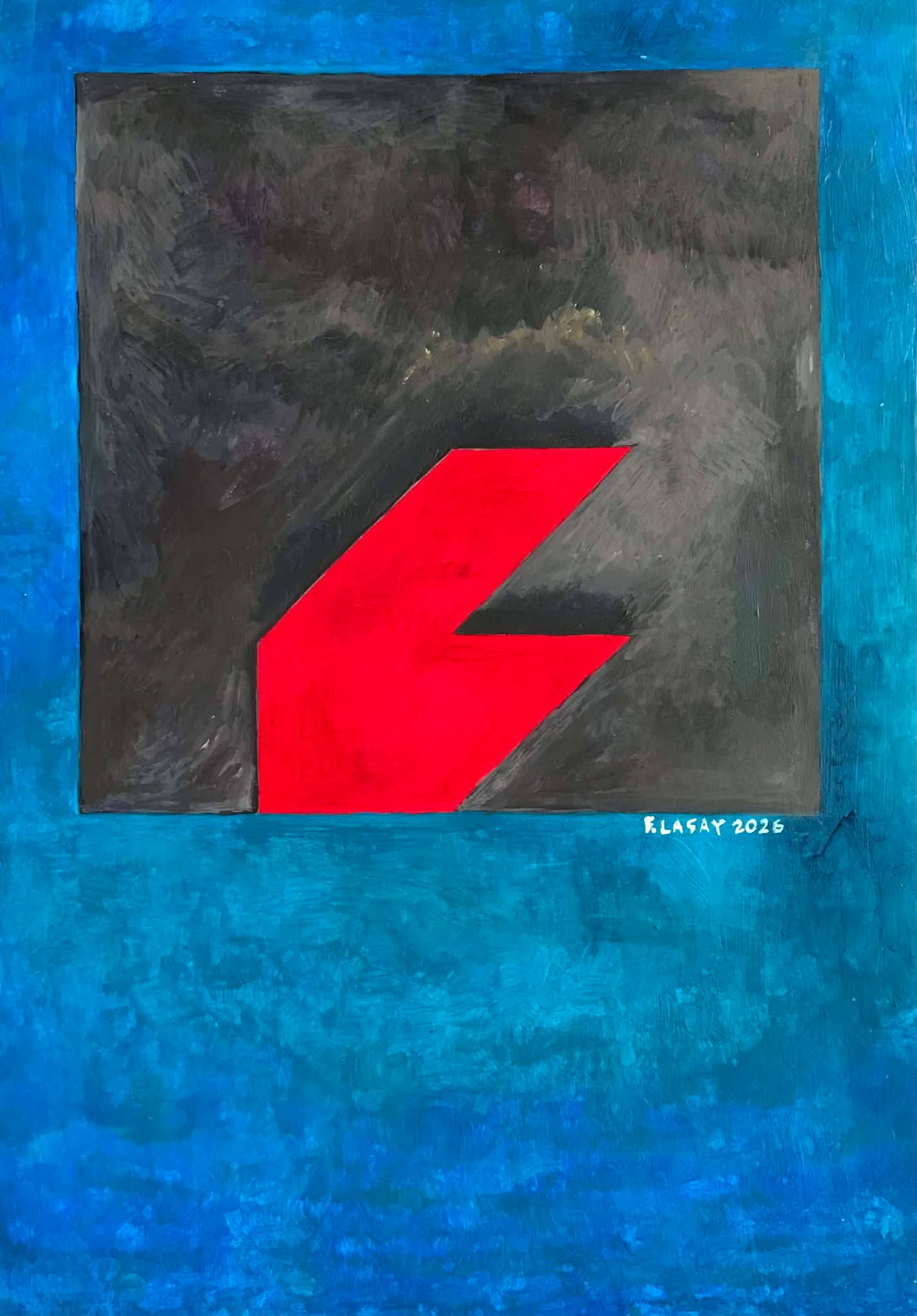
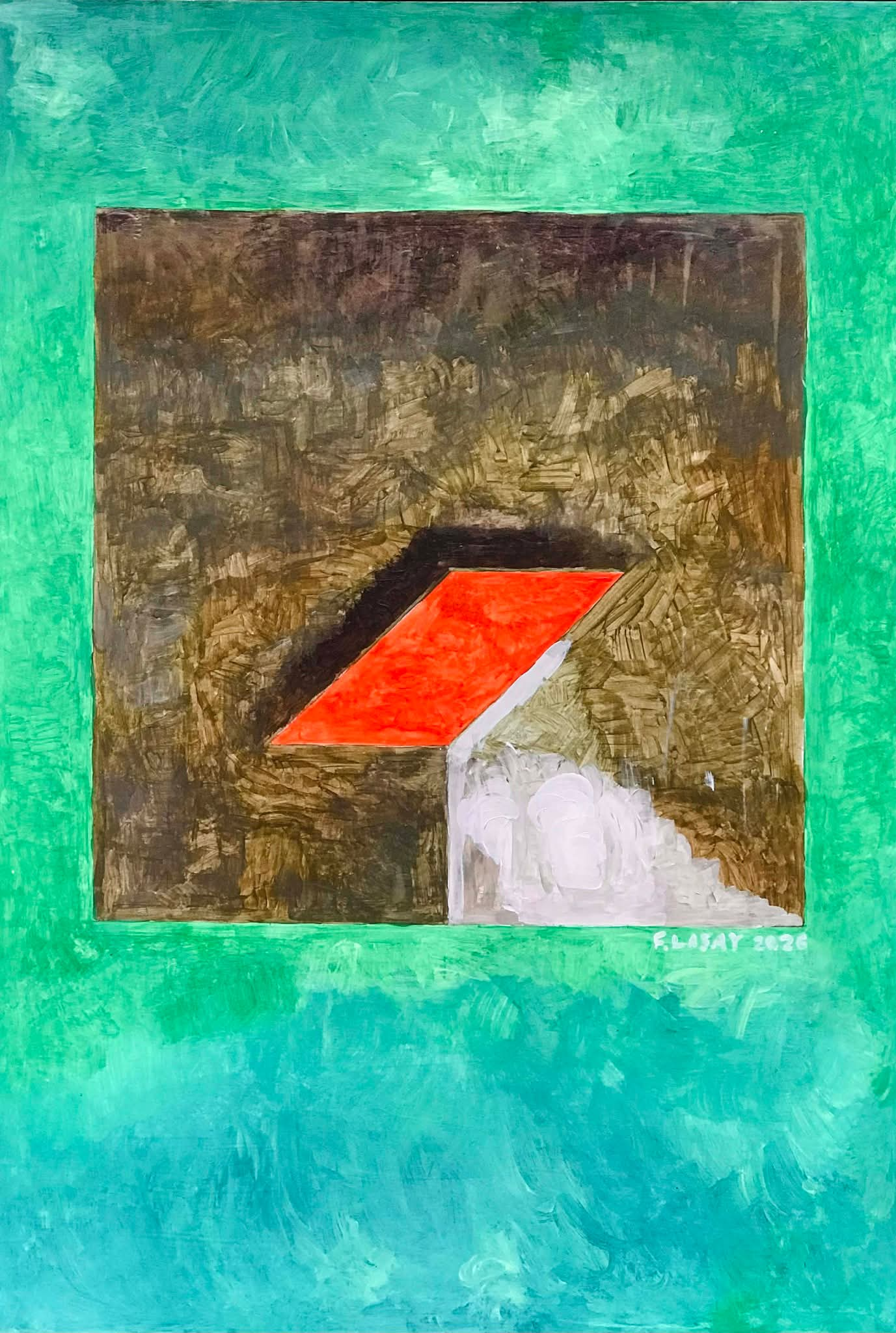
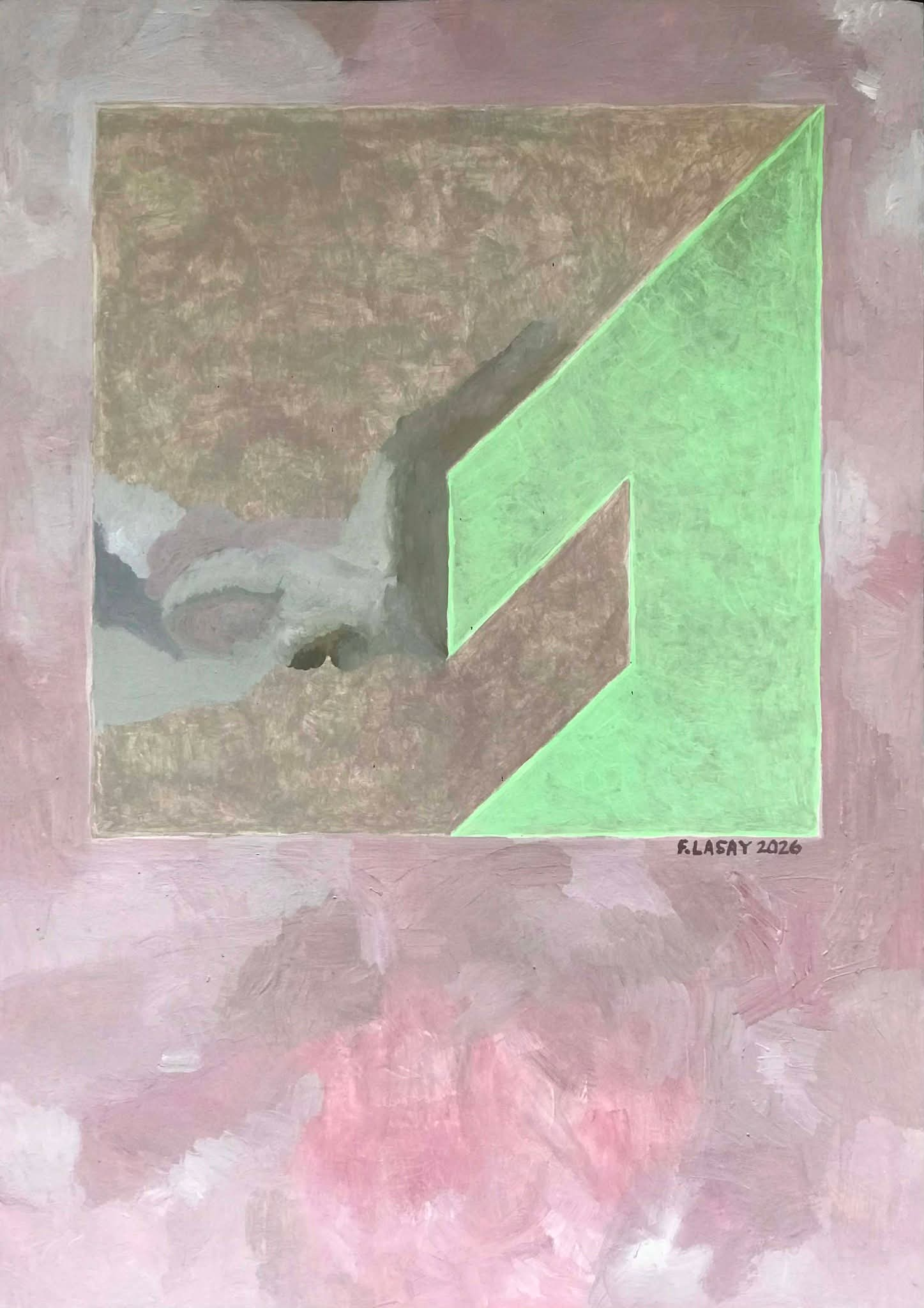
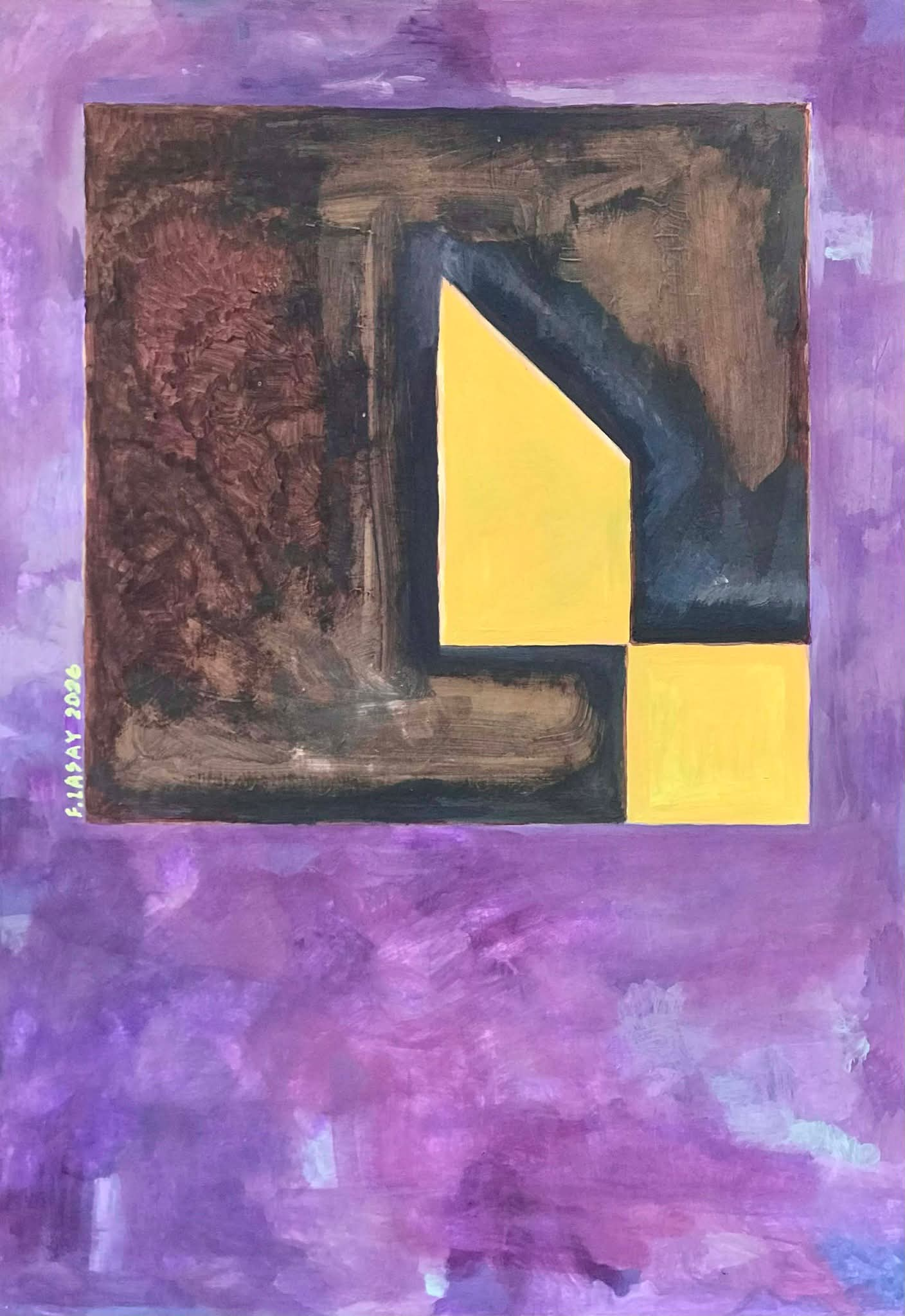
Fatima Lasay’s paintings translate her late husband Trevor Batten’s 1967 computer drawings into paintings. Batten, a pioneer of British computer art, passed away in Bohol, Philippines in 2023. Using lines from his “random walks”, Lasay layers gouache — “sculpting with color” — to befriend grief through systematic abstraction.
The Cebuano word higala means “friend.” It is a word preserved and reserved for formal and respectful settings. A similar formal and respectful distance helped Fatima Lasay produce works for the current exhibition. This is the distance from grief.
Her contributions to Higala are paintings based on her husband Trevor Batten’s early computer drawings. Batten passed away in 2023 in Bohol, Philippines.
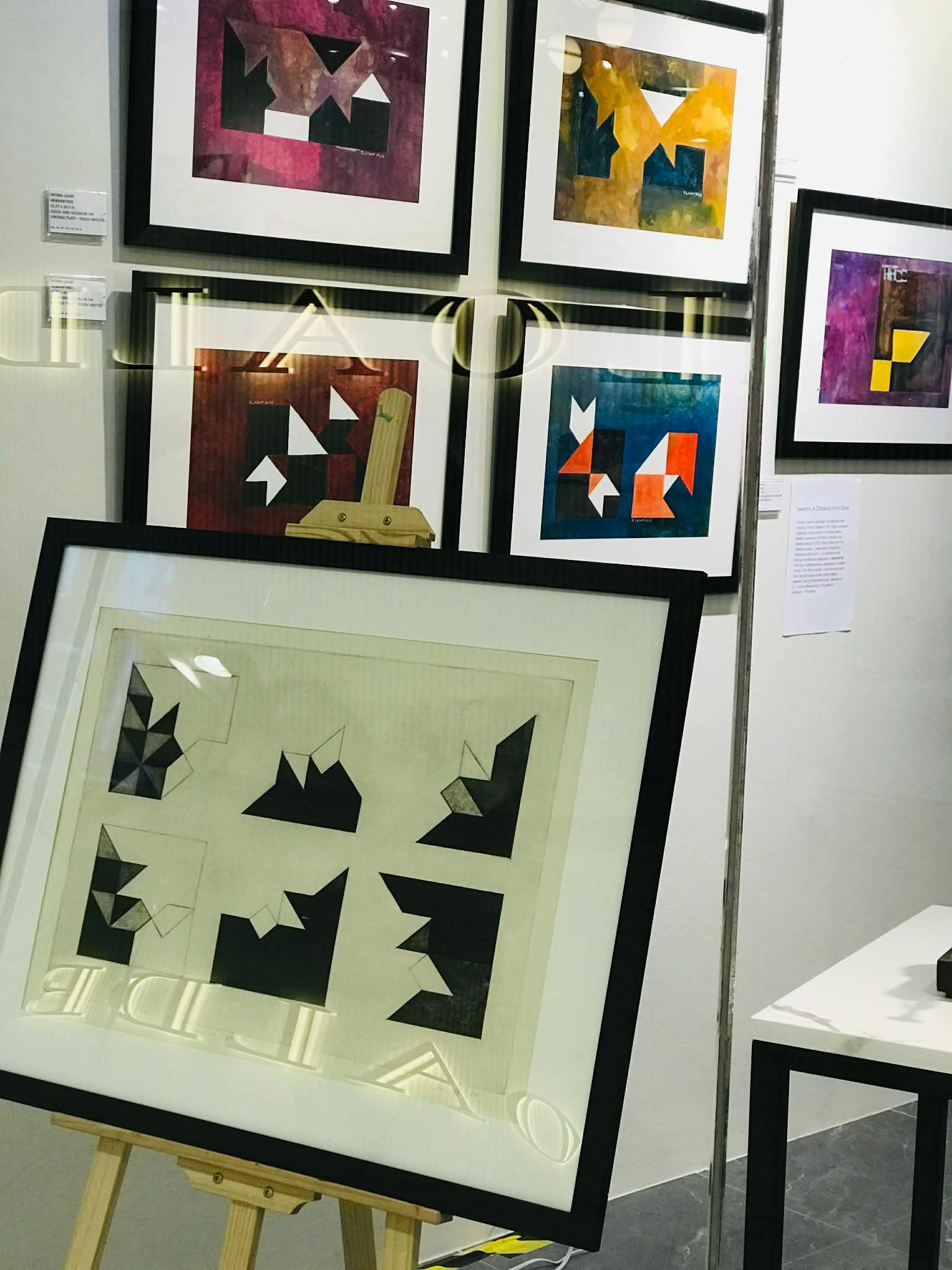
Lasay’s paintings use lines from Batten’s “random walks,” samples of which appear in a 1967 plotter print of twelve figures written in ALGOL on an Elliott 803 computer. This print is representative of Batten’s earliest work in computer art, which began between 1964 and 1967 when he met a higala — a friendly mathematician — at a school party. This higala helped Batten produce his first computer drawings at Exeter College of Art in the UK. Batten’s mezzotint “Six More Squares” are compositions based on computer drawings.
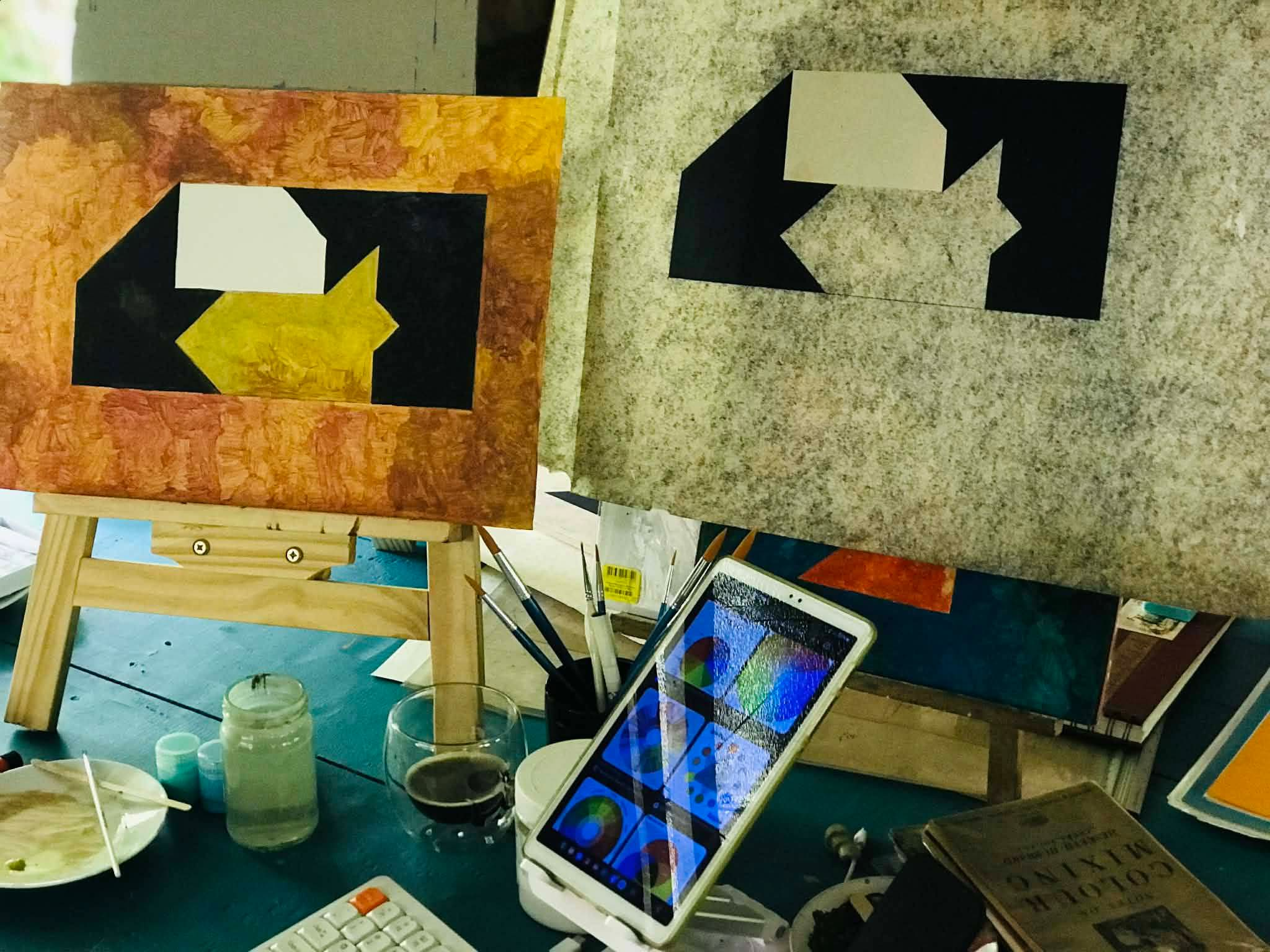
The derivative paintings, like their original sources, are abstract and non-pictorial. Lasay transcribed the diazotype originals onto vintage plate-finish Bristol board. The substrate is not inconsequential. The sheets date back forty years and were intended for use with pen plotters at the Institute of Sonology in Utrecht, where Batten continued his experiments in computer and electronic art. The paper’s plate-finish allows the pen to glide smoothly and dry quickly. For Lasay, this surface works perfectly with gouache. The paint is not merely applied but can be moved around, and when dry, layers can be added to adjust hue and intensity. The white sections are done in gesso for its brightness and opacity.
Gouache is one of painting’s oldest mediums. Its history in abstract art is rich owing to its material qualities. As Lasay has experienced, working with gouache is like sculpting with color. In her painting series, the relations between limited colors are exploited to create a spectrum. “Iwwhmt No. 1, 2, 5, 6, 7, and 8” consist of only two colors which are either complementary or analogous. “Iwwhmt No. 3, 4, and 9” are done in triadic colors. On a mixing plate, where colors are laid and combined in specific proportions, hue and saturation are defined. On application, texture is made. And when the destabilizing ache of grief sets in, the hours of paint glazing calm.
And what of the title of the paintings? The letters form a word that is foreign until its secret is revealed: “I wish we had more time.” This revelation stops the reader from uttering the letters, which have more syllables than the sentence they represent. For Lasay, the letters stop her from seeing the words she spoke to her husband before he passed away.
Truly, abstract art has a clarity and completeness that makes it, as Ad Reinhardt explained, “more demanding in its grasp of relations.”
Of Higala.